
When it comes to shopping for fresh food, many people find themselves weighing the pros and cons of the farmers market vs. grocery store.
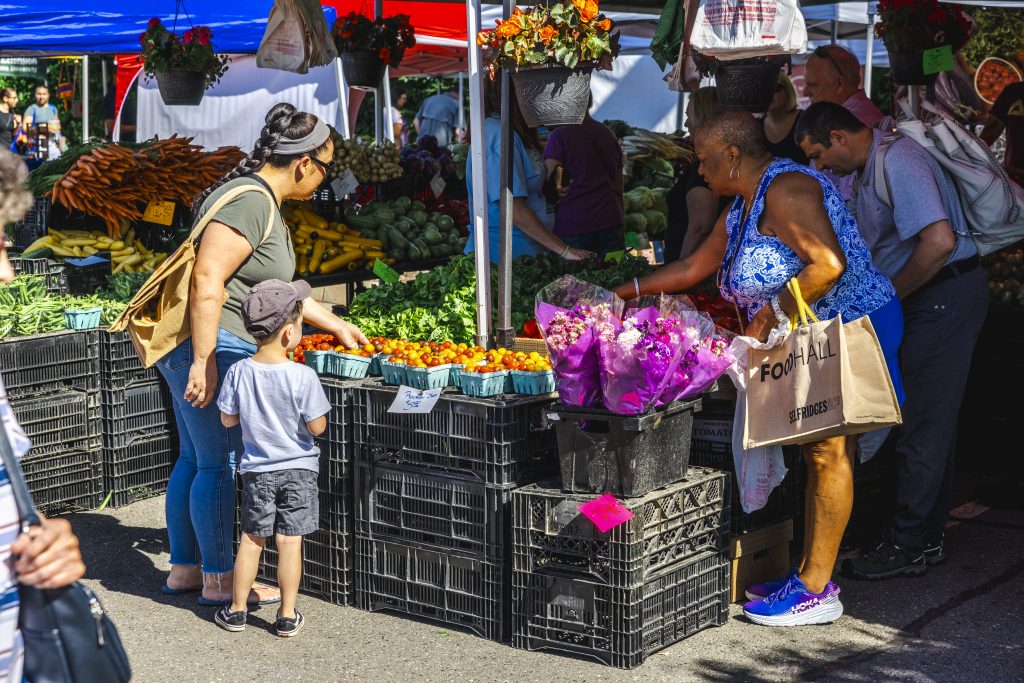
If you’ve ever strolled through the Historic Manassas Farmers Market, you know it’s more than just a place to buy produce—it’s an experience, one for the whole family. But beyond the charm of chatting with local farmers and vendors or picking out the freshest heirloom tomatoes, many shoppers overlook a practical benefit: farmers markets can be a powerful tool for nutritious, seasonal, and budget-friendly grocery shopping.
Farmers Markets: Not Just a Luxury
When comparing the farmers market vs grocery store, price is often the first factor shoppers consider. There’s a common myth that farmers markets are more expensive than grocery stores. While some specialty items might carry a premium, many staples, like eggs, greens, tomatoes, onions, squash, and herbs can be cheaper than what you’d find at a supermarket. According to the U.S. Bureau of Labor Statistics’ Consumer Price Index there has been a 2.6% increase in the cost of eating at home (grocery store or supermarket food purchases) since March 2024 with meat, poultry, fish, and eggs seeing the largest price increase of 7.7%. This is where shopping locally at the farmers market can help save a few pennies for your wallet while supporting our local economy.
Why? You’re cutting out the middleman. You're buying directly from the source, which often means better prices and more generous quantities. Farmers at markets can offer competitive costs by eliminating transportation and storage costs through direct sales of seasonal offerings. Large box stores often add costs to items to cover the extra steps from farm to shelf and ensure their profit margin. Other factors like commodity pricing, labor costs, store overhead, consumer demand, and food safety concerns drive prices at the grocery store more than they impact pricing for small-scale farmers.
We can see this direct effect in today’s current spike in egg costs. With the recent avian flu outbreak, large-scale egg producers are carrying higher overhead costs to account for the risk for flock depopulation, as reflected in egg costs reaching upwards of $9 a dozen in stores in some areas of the country. However, local, small-scale farmers who can sell directly to consumers and carry less of a risk with smaller flocks tend to rely on feed prices for price adjustments, rather than market conditions driven by supply and demand.
*Dietitian Fun Fact: Egg shell color does not determine the nutritional quality of the egg – the hen’s diet, age, stress level, and environment do!
Courtesy of HERD Ventures
Freshness Guaranteed = Better Nutrition
Another important consideration in the farmers market vs grocery store debate is freshness and nutrition. Grocery store produce may look fresh, but it's often harvested early, shipped long distances, and stored for weeks, leading to quicker spoilage, duller flavor, and reduced nutrients. In contrast, farmers market produce is picked at peak ripeness just 24 to 48 hours before sale, meaning it tastes better, lasts longer, and helps reduce food waste. Plus, eating seasonally from local farms supports better soil health and can lead to more nutrient-dense food. Emerging research shows that regenerative farming practices, like no-till planting and diverse crop rotation, may play a key role in both soil and human health. Stay tuned for a future blog diving deeper into soil health and regenerative farming!
More Than Just Produce
You’ve probably noticed the market isn’t just for produce and that many of our vendors offer other items like meat, bread, dairy, honey, sprouts, and pantry staples. These items often come from small-batch producers who emphasize quality and sustainability over volume. Supporting them not only bolsters our local economy, but it also connects you with your food in a meaningful way.
When it comes to some of those specialty items our vendors produce like grass-fed beef, pasture raised chicken and turkey, organically grown sprouts, and specialty breads, it’s important to note why these costs may be higher than a grocery store. Quality control, environmental responsibility, ethics, labor, animal welfare, and morality all play a role. Understanding and knowing the time and care that goes into producing the food you eat, from start to finish, is a shared responsibility of both producer and consumer. Vendors love to talk with market shoppers about their products, the practices they use, and the love and care they put into their craft. So, on your next market visit, be sure to spend a little time getting to know your food and the people behind it.
Ultimately, the farmers market vs. grocery store choice comes down to what matters most to you—price, quality, connection, and sustainability.
Dietitian Tips for Shopping Smart at the Farmers Market:
- Have a list: Just like the grocery store, bring a shopping list. Plan out your meals for the week ahead to prevent food waste and to stay on budget.
- Do a loop first: Walk the whole market before buying to compare prices and see what’s available.
- Eat the rainbow: While focusing on seasonal foods, be sure to choose an array of colors to increase vitamins, minerals, and antioxidant intake.
- Ask questions: Farmers are happy to share how they grow their food, when it was picked, and even how to cook it.
- Be flexible: Shop what’s in season and build your meals around that. It’s a great way to try new things and keep costs low while maximizing nutrient quality in food and for you!
By Brooke Wiseman, MS, RDN, LDN, a Registered Dietitian with a Master’s in Sustainable Food Systems.